Indo-Pacific Tango: Dancing Between Two Superpower Shadows

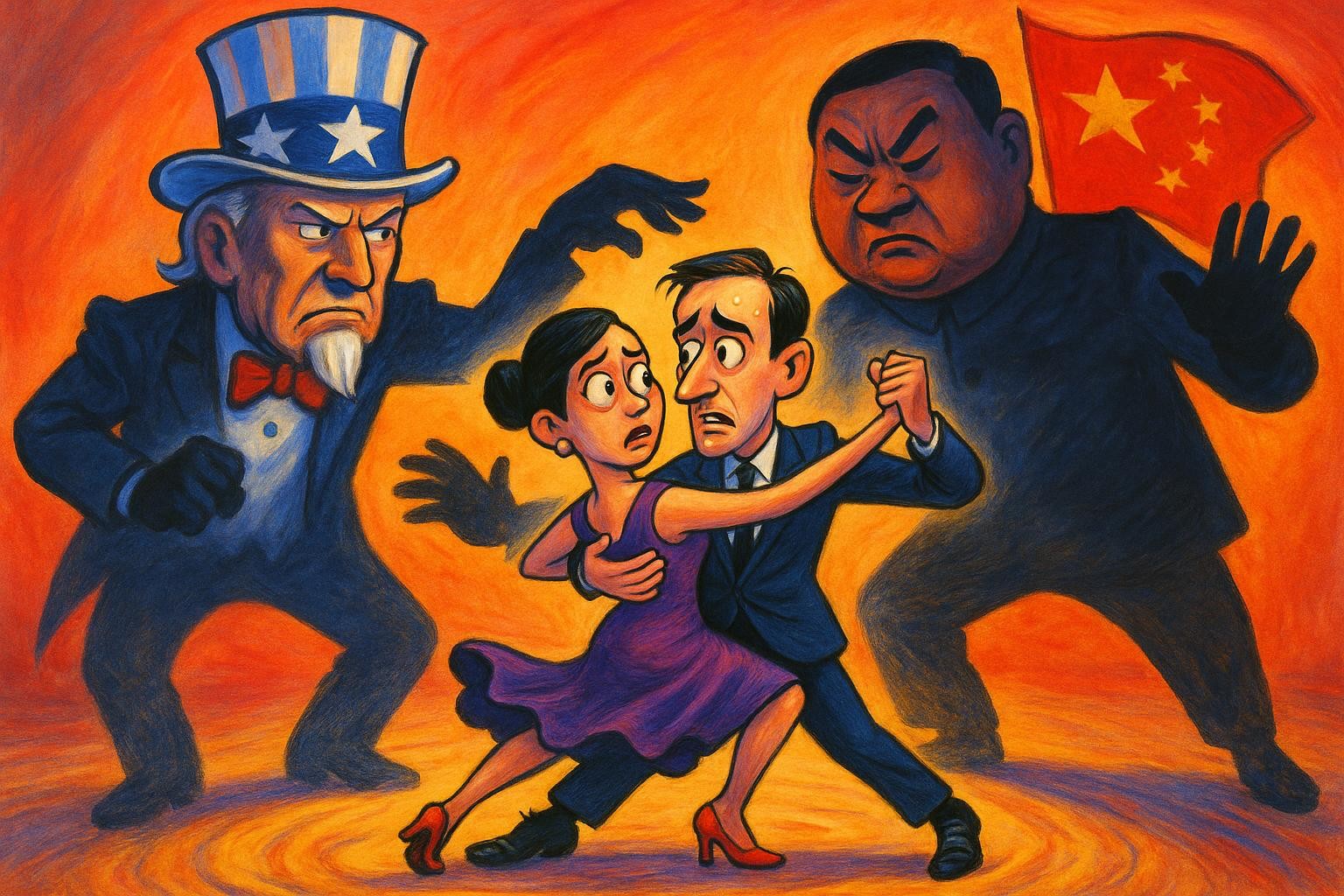
In an elegantly orchestrated performance only worthy of diplomatic maestros, nations nestled within the Indo-Pacific are twirling on the geopolitical dance floor, attempting to master a complex footwork of allegiances and avoidance. Anxious whispers flutter through the region as leaders hedge their bets on military partnerships – the choreography of choice to navigate the frosty pas de duex between a rising China and an ever-contemplate US.
As China's military star ascends, with more precision-guided steps than a Beijing ballerina, regional countries find themselves tiptoeing on an ever-shrinking tightrope. The US, meanwhile, remains the enigmatic partner, sometimes leading, other times merely stepping on toes, as its commitment to the waltz of alliance remains enigmatic at best.
National leaders are hurriedly sewing threads of defense ties, crafting a patchwork where no single color dominates – lest they ruffle the dragon's feathers or provoke the eagle's sharp eyes. It's a dizzying spectacle, one where the risk of misstep could result in a cascade of diplomatic dominoes.
It is a dance dictated neither by conquests nor alliances alone, but by necessity, improvisation, and, dare I suggest, a fear of being caught without a partner as the music changes. While regional leaders execute complex pirouettes to keep up appearances, one can't help but wonder if the dance will ever resolve or if the world’s two major superpower choreographers will forever alter the tempo, leaving their partners to perpetually scramble for balance. The silence between the notes, after all, can say more than the music itself.